 Translate
King County is Protecting Our Waters
Protecting our Waters is King County’s program to prevent pollution caused by excess stormwater in the sewer system on rainy days.
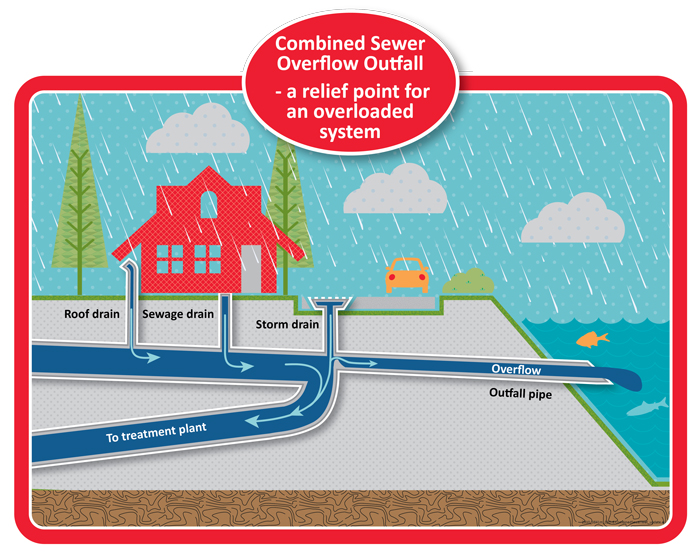
Most of King County has a network of pipes that sends wastewater directly to treatment plants to clean the water. However, in older parts of the system, including areas in Seattle, rainwater flows into the same pipes as wastewater. When heavy rainstorms fill these pipes with stormwater, combined sewer overflow outfalls (CSOs) release a mixture of stormwater and sewage into nearby bodies of water. These outfalls act as needed relief points if the system is overloaded. They were designed decades ago to prevent backups into homes and businesses. Today, to better protect local water bodies, King County is investing in solutions to limit the number of overflows that occur and ensure we can have the cleanest water quality possible.
CSO outfalls in King County exist only in older Seattle neighborhoods, where one set of pipes carries both sewage and stormwater. The water released through a CSO outfall typically contains about 90% stormwater and 10% wastewater. Most of the time, this water goes to a wastewater treatment plant.
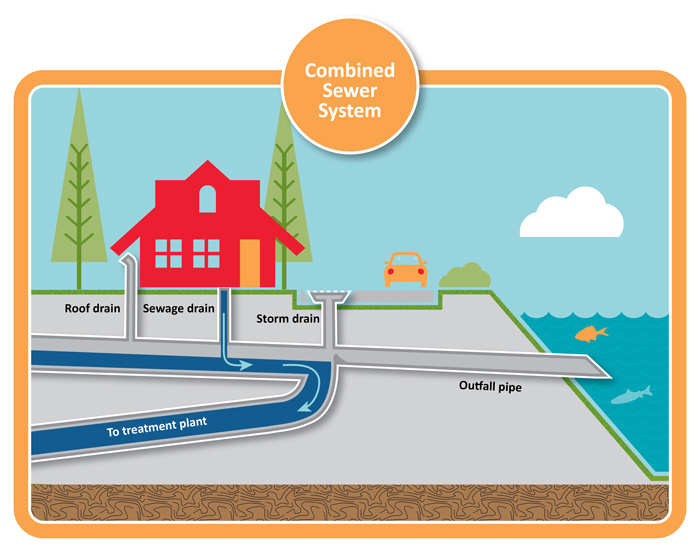
When heavy rains fill the "combined sewers," the extra sewage and stormwater is sent out into rivers, lakes, or Puget Sound through outfall pipes. King County and Seattle are working to control CSOs. A controlled CSO overflows no more than one time each year on long-term average. This is a Washington State standard.